The city and regency of Pekalongan, Central Java, Indonesia, were selected through KIWI (Klimaat- en Innovatieprogramma Waterschappen International), or the Climate and Innovation Program for Water Boards Internationally, to demonstrate their adaptive capacity to address the challenges of climate change, particularly those related to water. The Pekalongan region is exposed to a combination of land subsidence and sea level rise, leading to more frequent and severe flooding from the sea. Therefore, water pump stations play an increasingly important role in preventing and mitigating the impacts of routine flooding. Currently, water pump stations operate on electricity generated from power plants, most of which run on fossil fuels such as coal or conventional diesel. Increasing the frequency of pump house operations for longer periods of time results in increased CO2 emissions and operational costs.
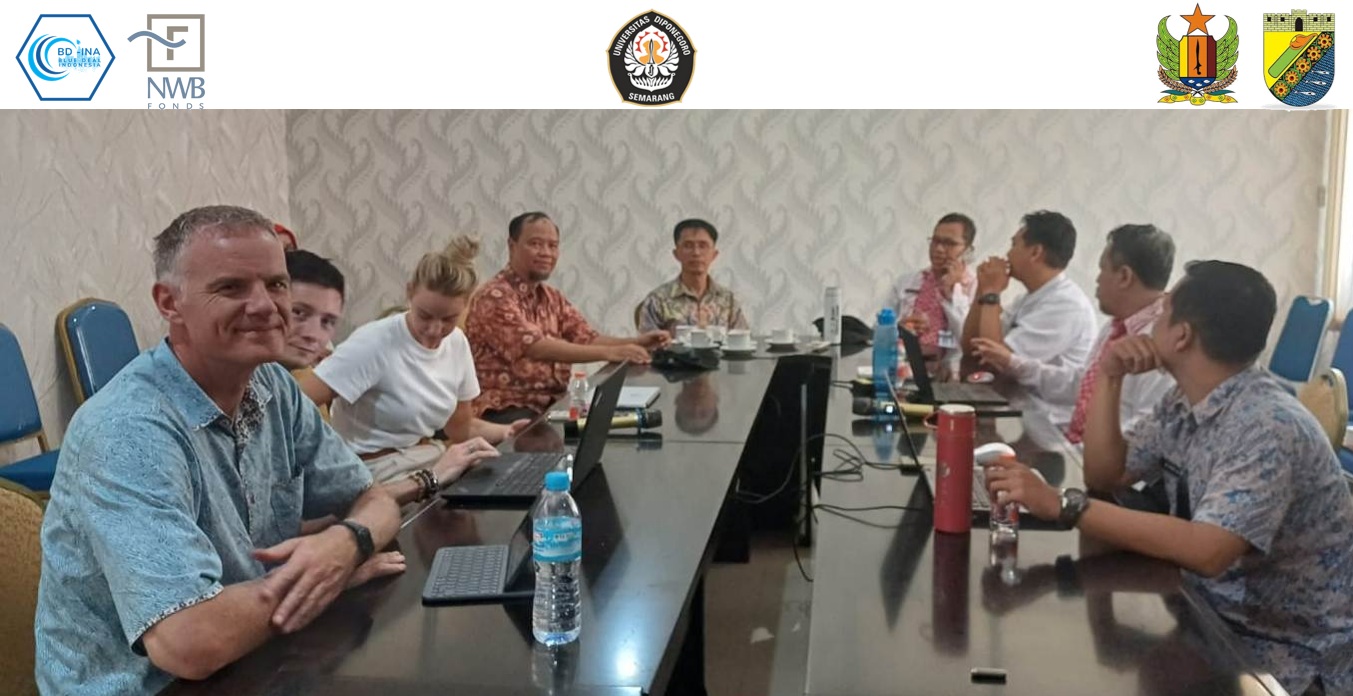
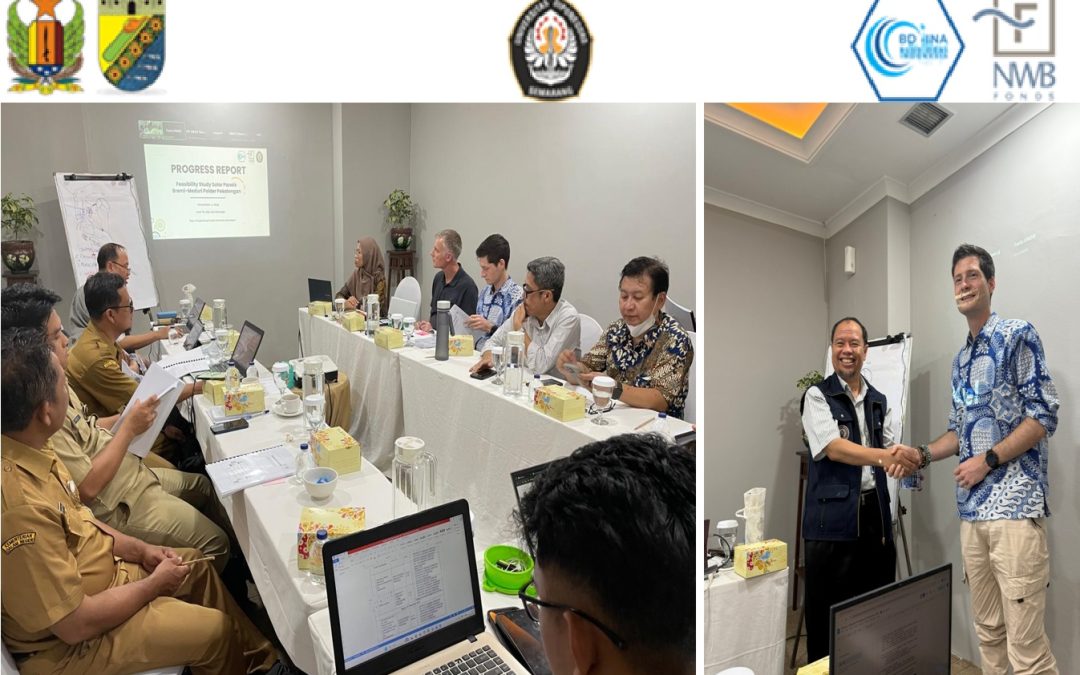
On this activity, the Department of Electrical Engineering, Faculty of Engineering, Universitas Diponegoro, in collaboration with Blue Deal (BD) Netherlands, the Nederlandse Waterschapsbank Fund (NWB), the Dutch Water Authority Bank Fund, the Pekalongan City, and the Pekalongan Regency Government, has been conducting a study and counselling program on solar energy for pump stations in Pekalongan. The activities consisting of surveys, research, and community service were carried out by the electrical and engineering team, consisting of Assoc. Prof. Dr. Ir. Mochammad Facta as team leader, Assoc. Prof. Dr. Ir. Aghus Sofwan as chief of the electrical department, co-technical expert, and electronics expert, Prof. Dr. Gunawan as mechanical and pump engineering expert, Prof. Dr. Iwan Setiawan as renewable electrical energy expert, Assoc. Prof. Ir. Karnoto M.Eng as energy conservation and electrical engineer, Alfia Putri Wulandari, M.Eng as an electrical engineer, and Laily Asna Safira, M.Eng as a control instrumentation engineer. On the other hand, the Blue Deal Team consists of Ing. Marcel Roet as a team manager, polder and dykes engineer, Luuk van Elk, B.Sc., M.Sc. as hydrology expert, and Ing. Daniël Esselink as a mechanical engineer. From the local government of Pekalongan, Imron Rosyidi, S.Pi., M.App.Sc., a Head of the Economic, Natural Resources, Infrastructure, and Regional Affairs Division of Regional Development Planning, Research and Innovation Agency (Bapperida), and Purwo Susetiyo, S.T., as a Head of the Water Resources Division of the Public Works and Spatial Planning Agency, served as the coordinator of the Pekalongan City Regional Government team. The Pekalongan Regency Government team was coordinated by Widi Hari Nugroho, ST, MT., a Head of the Economic and Infrastructure Division of Regional Development Planning, Research and Innovation Agency (Bapperida) at Pekalongan Regency and Pujo Pramudiharto, S.T., as a Head of the Public Works, Water Resources and Spatial Planning Department at the Pekalongan Regency. The work started from October 22, 2024 until this year in 2026.
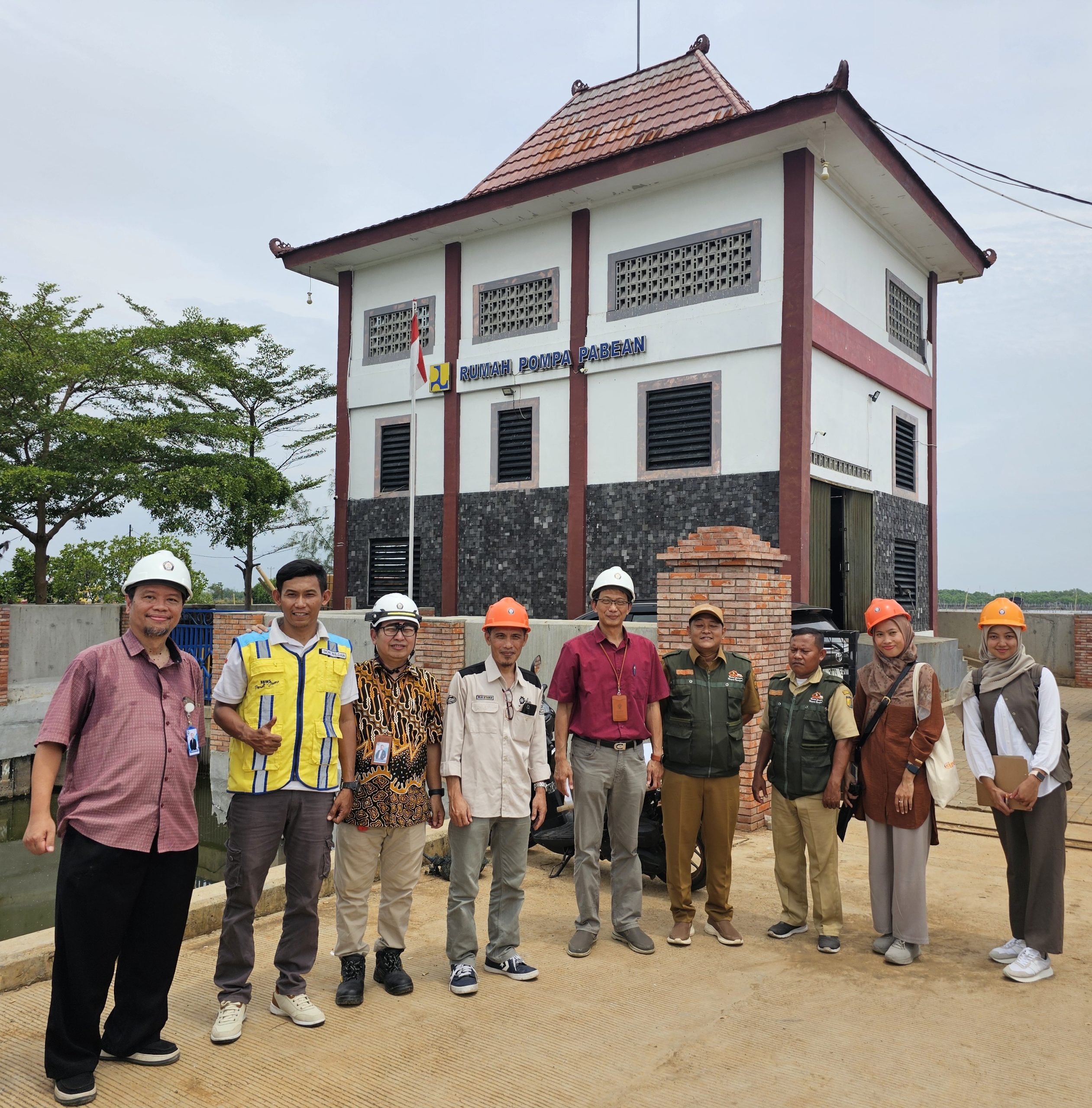
The undergraduate and master’s students in Electrical Engineering (MTE) at Universitas Diponegoro (UNDIP) were involved in data collection, measurements, and analysis. Even, several students included these activities as part of their thesis research. Six locations of pump stations were studied in this collaborative activity: four in Pekalongan City and two in Pekalongan Regency. The pump stations are located in different locations, but they are all located along the banks of the Bremi Meduri River in Pekalongan.
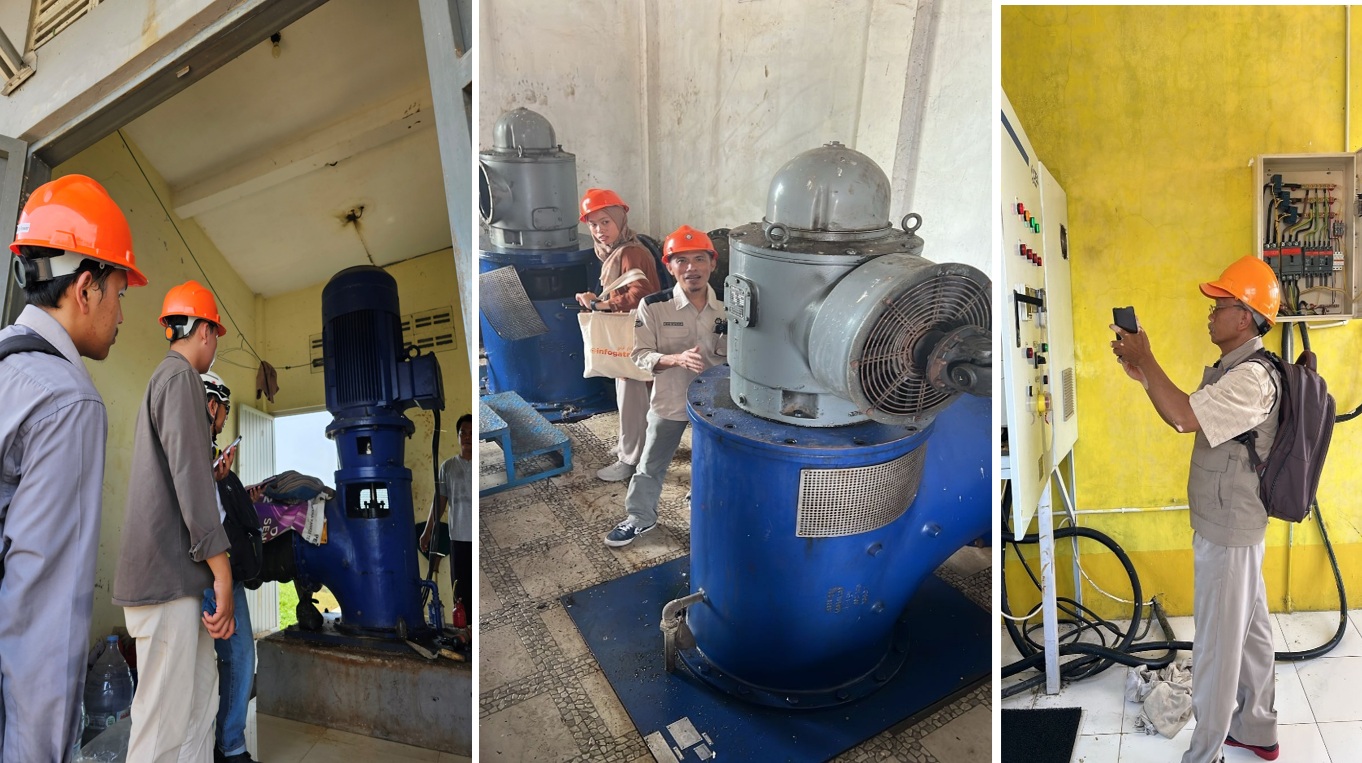
The survey and research aimed to provide solutions for selecting the type of solar power generation system appropriate to the unique conditions of each pump station. Furthermore, the study results, conducted jointly by the UNDIP Electrical Engineering team and Blue Deal, provided the Pekalongan regional government with various technically and economically feasible alternative designs for utilizing solar panel-based electrical systems in each pump station. This collaborative activity significantly benefits undergraduate and graduate students in the UNDIP Department of Electrical Engineering, enabling them to play an active role and gain experience in solving real-world problems through a systematic approach in electrical engineering, enabling them to provide the best technical solutions.